

Non-profit filing checklist Perris for your organization |
Explore Perris CA non-profit documents and non-profit formation Perris CA requirements |
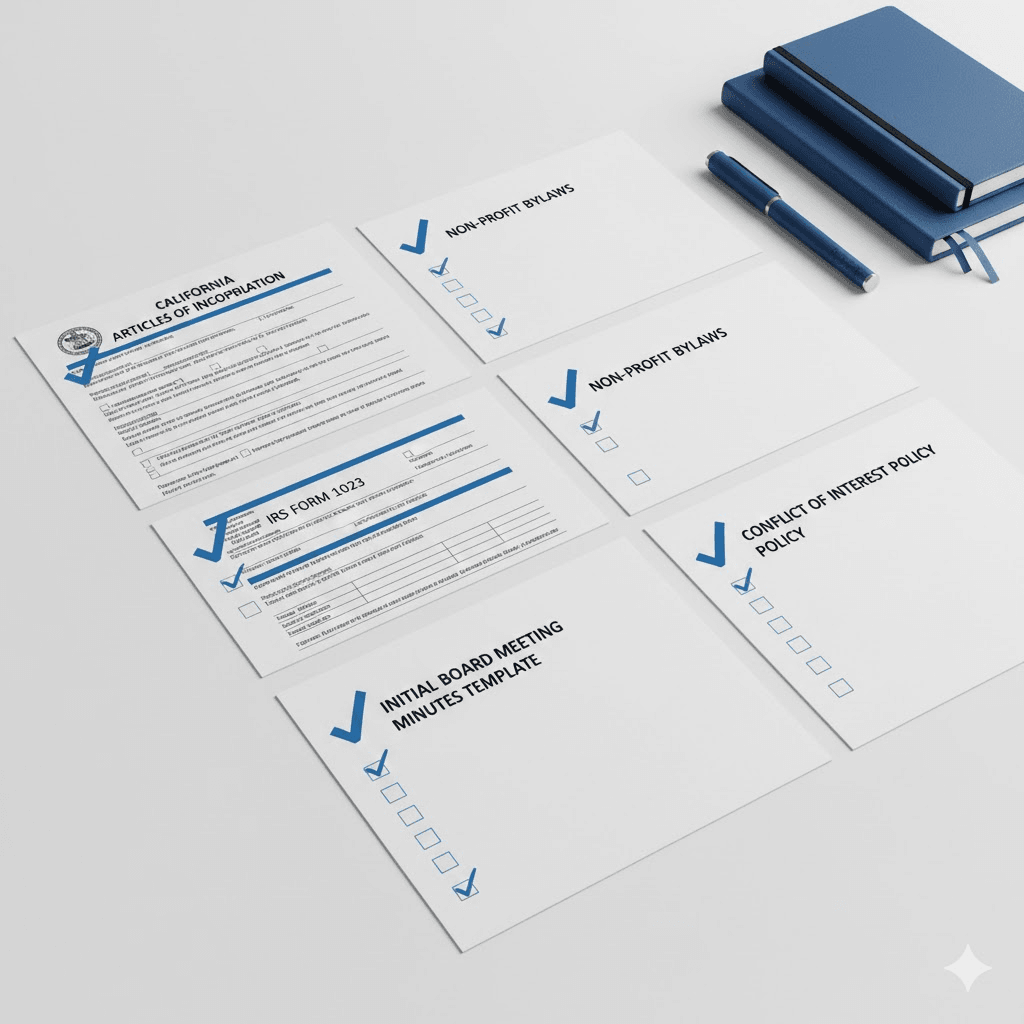
To start a non-profit in Perris, CA, you need several key documents including Articles of Incorporation, organizational bylaws, IRS Form 1023 or 1023-EZ, conflict of interest policy, and initial board meeting minutes. Preparing these documents accurately ensures smooth filing with California and federal agencies and helps avoid delays in the approval process.
Embarking on the journey to establish a non-profit organization in Perris, CA, requires meticulous preparation and adherence to both state and federal regulations.
Ensuring all necessary documents are accurately prepared and submitted is crucial for a smooth formation process.
Below is a comprehensive checklist to guide you through the essential steps and documentation required.
Articles of Incorporation
The foundational document for your non-profit is the Articles of Incorporation.
In California, this is filed using Form ARTS-PB-501 with the Secretary of State.
Key elements to include are:
- **Organization's Name**: Ensure it is unique and includes a corporate designator like "Corporation," "Incorporated," or "Inc."
- **Purpose Statement**: Clearly define the non-profit's mission and objectives.
- **Agent for Service of Process**: Designate an individual or entity to receive legal documents on behalf of the organization.
- **Address**: Provide the initial street address of the corporation.
- **Dissolution Clause**: Outline the distribution of assets upon dissolution.
The filing fee is $30, and processing typically takes 5-7 business days.
Expedited services are available for an additional fee.
Ensure compliance with California Corporations Code sections 5120-5121 to avoid rejection.
Organizational Bylaws
Bylaws serve as the internal operating manual for your non-profit.
While not filed with the state, they are essential for IRS tax-exempt applications and effective governance.
Typical provisions include:
- **Board Structure**: Define the number of directors, their roles, and election procedures.
- **Officer Duties**: Outline responsibilities of officers such as President, Secretary, and Treasurer.
- **Meeting Protocols**: Establish guidelines for meetings, quorum requirements, and voting procedures.
- **Membership**: If applicable, detail membership criteria and rights.
- **Amendment Procedures**: Specify how bylaws can be amended.
Bylaws must align with the Articles of Incorporation and reflect the organization's operational structure.
Conflict of Interest Policy
Implementing a Conflict of Interest Policy is strongly recommended in California and required by the IRS for tax-exempt status.
This policy should address:
- **Identification of Conflicts**: Procedures for recognizing potential conflicts among board members and officers.
- **Disclosure Requirements**: Mandate disclosure of any conflicts.
- **Recusal Procedures**: Outline steps for individuals to recuse themselves from decisions where a conflict exists.
- **Annual Statements**: Require annual disclosure statements from board members.
Adopting this policy promotes transparency and integrity within the organization.
Initial Board Meeting Minutes and Resolutions
Documenting the inaugural board meeting is vital.
Key records to maintain include:
- **Meeting Minutes**: Record discussions and decisions made during the meeting.
- **Adoption of Bylaws**: Formalize the approval of the organizational bylaws.
- **Conflict of Interest Policy Adoption**: Document the adoption of the policy.
- **Officer Appointments**: Record the election or appointment of officers.
- **Authorization Resolutions**: Approve actions such as opening bank accounts and filing for tax-exempt status.
These documents are not filed with government agencies but must be retained for organizational records and may be requested during audits or reviews.
Employer Identification Number (EIN)
An EIN is a federal tax identification number required for various activities, including opening bank accounts and filing tax returns.
Obtain an EIN from the IRS through their online application system at no cost.
This should be completed before applying for tax-exempt status.
Federal Tax-Exempt Status Application
To obtain 501(c)(3) tax-exempt status, submit either IRS Form 1023 or the streamlined Form 1023-EZ.
Eligibility for Form 1023-EZ includes:
- **Projected Annual Gross Receipts**: Under $50,000.
- **Total Assets**: Under $250,000.
- **Organizational Type**: Not a hospital, school, or supporting organization.
Form 1023-EZ has a $275 user fee, while Form 1023 requires a $600 fee.
Processing times vary from 2 to 6 months.
Ensure all required documents, such as approved Articles of Incorporation, bylaws, and Conflict of Interest Policy, are included with your application.
State Compliance: Statement of Information
Within 90 days of incorporation, file the Statement of Information (Form SI-100) with the California Secretary of State.
This form provides current information about the corporation's officers, directors, and business address.
The filing fee is $20, and it must be filed biennially thereafter.
Failure to file can result in penalties and suspension of corporate status.
California Attorney General Registration
If your non-profit intends to solicit donations in California, registration with the Attorney General's Registry of Charities and Fundraisers is mandatory.
Initial registration involves submitting Form CT-1, typically due within 30 days of receiving charitable assets.
Annual renewals require Form RRF-1 and financial reporting.
Fees are based on gross annual revenue.
Maintaining good standing with the Attorney General is essential for fundraising activities.
Local Compliance in Perris, CA
While Perris adheres to California's general non-profit formation requirements, it's advisable to check for any local ordinances or permits that may apply to your organization's activities.
Contact the City of Perris or Riverside County offices to ensure compliance with local regulations.
Conclusion
Establishing a non-profit in Perris, CA, involves a series of detailed steps and documentation.
By diligently preparing and submitting the required documents, you can navigate the formation process effectively, laying a solid foundation for your organization's mission-driven endeavors.
Need Help?
The Nonprofit Launch Office™ — a discipline of The Document Pro, operated by Gitta Williams. Book: https://thedocumentpro.com/ Call: 1(800) 285-0078 Email: mydocumentpro@gmail.com Operated by The Document Pro (Gitta Williams)
|
0 Comments
Join the conversation
Be the first to comment
Share your thoughts above.